Sparring · Competition-style primer

Kumite

Techniques, scoring language, and aka/ao etiquette in plain English. Written for parents and new competitors — not a copy of any official rulebook, and not a trademark claim.

Also see Kata →

Punch

Oi-zuki

Stepping punch

Long-range punch delivered with the lead step — common entry scoring tool.

  • Step and punch finish together
  • Hips drive the hand; shoulder stays down
  • Recover guard immediately after contact
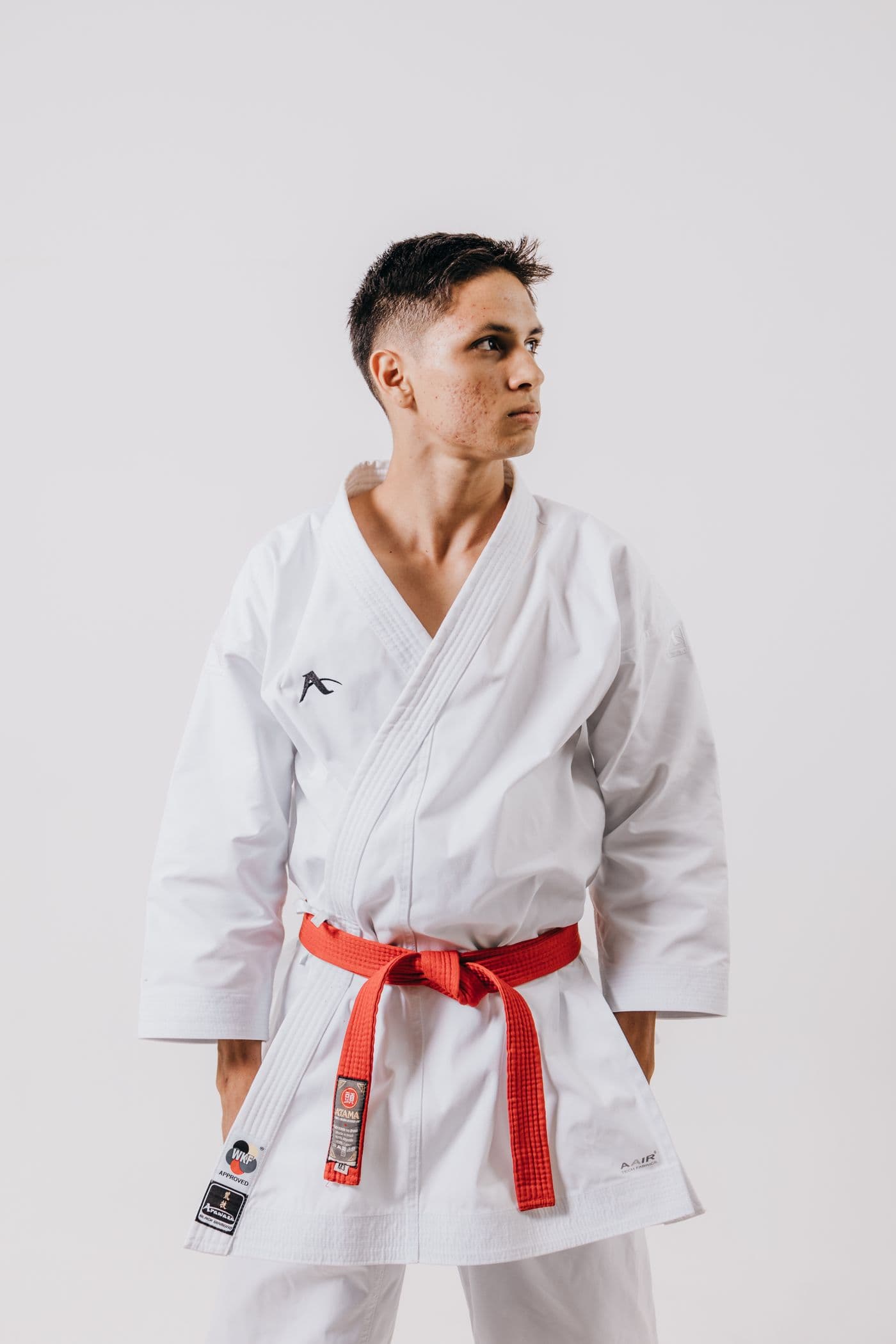
Gyaku-zuki

Reverse punch

Rear-hand punch — the classic counter after a kick or slip.

  • Rear heel drives rotation
  • Ideal after mae-geri or a missed attack
  • Keep chin tucked and front hand covering

Kick

Mae-geri

Front kick

Straight front kick to the midsection — fast, linear, hard to see early.

  • Knee chambers high before the snap
  • Strike with the ball of the foot
  • Retract quickly to avoid a catch

Mawashi-geri

Roundhouse kick

Circular kick to body or head — high reward when timed on an open guard.

  • Pivot the standing foot for hip turn
  • Target the side of the gi / head gear area
  • Do not telegraph with a big wind-up

Yoko-geri

Side kick

Sideways thrusting kick — strong for creating distance or body scores.

  • Chamber across the body, then thrust
  • Heel or blade of the foot depending on style drills
  • Keep the supporting leg bent for balance

Ushiro-geri

Back kick

Spinning or turning back kick — surprise weapon when the opponent over-commits.

  • Look over the shoulder before the thrust
  • Keep the path linear to the target
  • Land ready to follow with gyaku-zuki

Scoring

Yuko

One-point score — typically a clean mid-level punch or equivalent.

  • Clean technique, good distance, and control
  • Often awarded for chudan punches
  • Demo scoring only — check your event’s sheet

Waza-ari

Two-point score — commonly a chudan kick delivered with form and timing.

  • Body kicks with clear impact and recovery
  • Must show balance after the kick
  • Demo naming — local leagues may vary

Ippon

Three-point score — typically a jodan kick or a decisive throwing-linked score.

  • Head-level kicks need exceptional control
  • Highest value single technique in many formats
  • Never sacrifice safety for an ippon attempt

Etiquette

Aka / Ao

Red (aka) and blue (ao) corners — colours identify each athlete on the tatami.

  • Aka usually starts on the referee’s right (confirm locally)
  • Mitts, belts, or sashes match the corner colour
  • Scoreboards and calls use aka/ao, not names

Senshu

First unscored lead — the athlete who opens the scoring may hold senshu.

  • Used as a tie-break in many competition formats
  • Displayed on the scoreboard after the first score
  • Exact rules differ by organiser — treat this as a primer

Scoring names (yuko, waza-ari, ippon) and aka/ao are used as common sport-karate vocabulary. Confirm the sheet for your event.